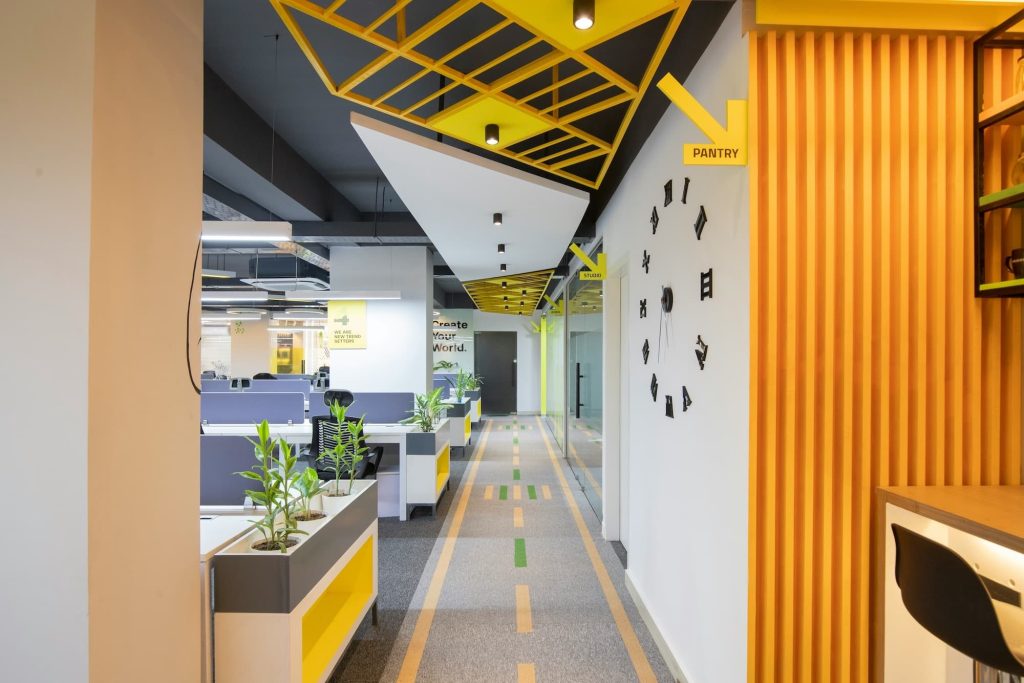

Regulatory deadlines are tightening, investors are voting with their capital, and tenants are increasingly choosing office space the way they choose software: based on what it can demonstrate, not just what it promises.
The good news is that the transition to smarter, more sustainable office buildings is not just a cost story. Done right, it is a tenant acquisition and retention tool, and the data is starting to prove it.
The regulatory landscape: no more watching and waiting
European real estate sits at the centre of an accelerating regulatory wave. The Energy Performance of Buildings Directive (EPBD) is now moving through national transpositions across the EU, requiring member states to establish minimum energy performance standards. By 2030, the EU’s building stock must reach at least an energy performance class E, with class D required by 2033. Currently, nearly half of EU buildings fall below class D, making the renovation and upgrade challenge enormous. (Deepki, ESG and Regulation Are Shaping European Real Estate)
Alongside this, SFDR 2.0 revisions and the Green Claims Directive are reshaping what asset managers can say publicly about their sustainability credentials, raising the bar on disclosure and reporting. The Corporate Sustainability Reporting Directive (CSRD) is also extending its reach, pulling in a broader range of companies and requiring granular disclosures on environmental impact. (CBRE, European Sustainability Outlook 2026)
At the banking level, the European Banking Authority’s final guidelines on ESG risk management have entered into force this year. Combined with CRD 6, banks must now formally embed climate and environmental risks into their capital planning, which has a direct knock-on effect on commercial real estate lending. Older, energy-inefficient office buildings are increasingly being flagged as transition risks and potential stranded assets. (KPMG, ESG Risks in 2025: Responding to Regulatory and Supervisory Pressure)
What the market is telling us
The investor community has absorbed these signals. In a February 2025 survey of UK and European real estate investors conducted by JLL, 76% of respondents said sustainability considerations had impacted their investment decisions over the prior 12 to 24 months. Of those, 35% had decided not to bid on an asset due to sustainability concerns, and 30% had lowered their offer price. Meanwhile, 69% noted a measurable reduction in value for assets that did not meet sustainability criteria. (JLL, Sustainability Remains a Key Driver for European Real Estate Investors)
Physical climate risk is also commanding boardroom attention. The PwC and Urban Land Institute Emerging Trends in Real Estate Europe 2026 report found that 83% of industry leaders now consider physical climate risk the second most important ESG credential for accessing finance, after energy efficiency. Europe is the fastest-warming continent according to the European Environment Agency, and recent years have brought flooding across Central Europe and Spain, and devastating wildfires across the south. The risk is no longer abstract. (PwC / ULI, Emerging Trends in Real Estate Europe 2026)
Perhaps the starkest data point for the office market comes from JLL’s green building supply analysis: across major European cities, the supply of genuinely low-carbon office space is projected to fall dramatically short of occupier demand. Paris faces a projected 54% shortfall by 2030. London faces a 35% gap. Without significant acceleration in retrofitting and smart building upgrades, the supply-demand imbalance will widen to over 70% globally by 2030. (JLL, The Green Tipping Point)
What the industry needs to do now: key recommendations
Prioritise buildings that can demonstrate performance, not just certifications
There is a growing distinction between buildings that hold a green certification and buildings that can prove real-time energy and sustainability performance. Tenants with Science-Based Targets and Scope 1 and 2 carbon commitments — now numbering in the thousands globally, need auditable data, not a plaque on the wall. Asset managers should invest in data infrastructure that allows continuous monitoring of energy consumption, occupancy, and emissions. This is what frameworks like GRESB and CRREM are beginning to require, and what incoming regulations are moving toward mandating.
Treat the green lease as standard, not premium
62% of new commercial leases now include green provisions, up from around 50% just two years prior. These clauses align landlord and tenant sustainability goals, covering energy data sharing, utility monitoring, and waste management obligations. Office owners who are not yet offering structured green lease frameworks are already behind the market. (Rhino Energy, Top 5 ESG Trends in Real Estate in 2026)
Accelerate retrofits, but be strategic about it
The Renovation Wave under the EU Green Deal targets doubling annual renovation rates across the bloc’s building stock. For commercial office assets, this means energy audits, smart metering, and automated building management systems are becoming table stakes rather than differentiators. In some markets this is no longer voluntary: in the Netherlands, large offices must now automate system monitoring and optimisation or face compliance risk. Asset owners should map their portfolios against the CRREM pathways now to identify which assets are at risk of stranding, and prioritise upgrades accordingly.
Do not separate digital investment from ESG investment
The European proptech market is growing at close to 19% per year and is being turbocharged by EU regulatory requirements for digital monitoring across building stock. The industry risk is treating technology and sustainability as separate workstreams. In practice, the data layer is the sustainability layer. Smart building platforms that generate occupancy data, track energy use in real time, and surface actionable insights are directly supporting ESG reporting obligations, and reducing the cost of compliance.
The tenant attraction opportunity: how digitalisation changes the game
Here is where forward-thinking asset managers and landlords are starting to separate themselves from the pack: they are not just using digital building technology to meet compliance thresholds, they are using it to reposition their office assets as active tools for corporate tenant strategy.
The shift in what tenants are looking for in office space is well documented. Post-pandemic, hybrid working has become the default for most knowledge-economy companies. This means office space is no longer judged primarily on square footage or location alone, it is judged on what it enables: how well it manages hybrid attendance, whether it helps employees find each other and their spaces, whether it makes the experience of coming in feel worth it, and whether it generates the kind of space usage data that a CFO needs to justify the lease.
Smart office buildings, those equipped with desk booking systems, real-time occupancy analytics, interactive floorplans, room and resource reservation tools, and tenant experience platforms, directly answer those questions. They turn a static building into a dynamic workplace that can flex around how people actually work today.
The business case for landlords is compelling. Buildings that offer this kind of digital infrastructure attract a new class of tenant: corporate occupiers who have internal return-to-office mandates to support, sustainability reporting requirements to meet, and an expectation that their physical office environment will function at the same level of sophistication as their digital tools. These are exactly the tenants who sign longer leases, pay premium rents, and choose spaces that can be demonstrated to investors as high-quality assets.
CBRE research in the European market has found that ESG-certified office buildings can command rental premiums of around 6% compared to non-certified buildings, and that certified green buildings can achieve capital values 14 to 16% higher than comparable uncertified properties. Digital readiness, captured, for example, through certifications like WiredScore or SmartScore, is increasingly part of that valuation story.
The ULI Europe PropTech Innovation Challenge has challenged entrants to address environmental, economic, and social resilience in real estate across eight European regional markets, a signal that the institutional real estate community views tech and ESG as deeply intertwined. (ULI Europe, 2026 PropTech Innovation Challenge)
From data to differentiation
The practical implication for building owners and their asset managers is this: the digital layer of an office building has become a core part of its commercial proposition.
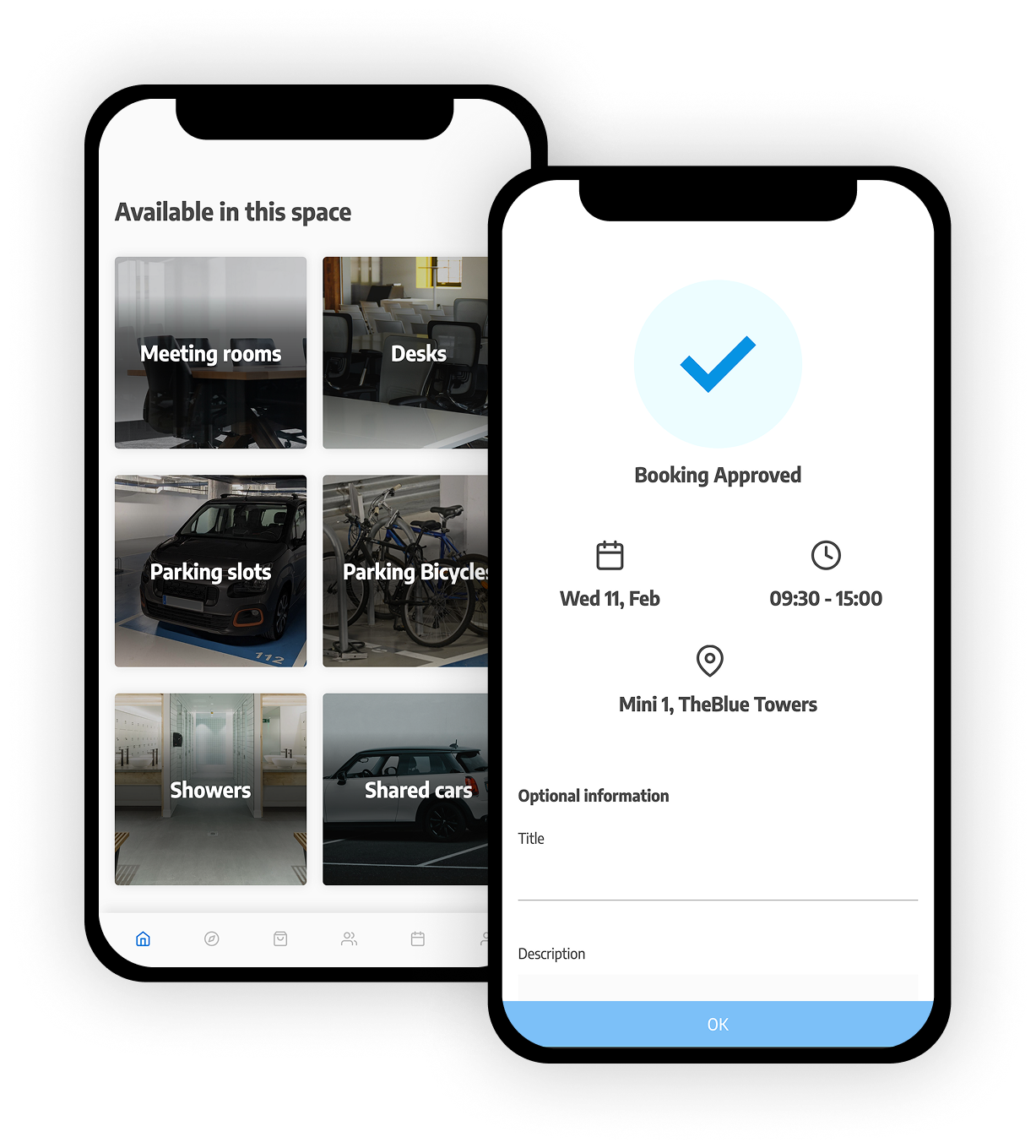
A building that can show a prospective tenant real-time occupancy data from the last 12 months, a desk booking system that integrates with their HR and IT infrastructure, meeting room utilisation analytics that help optimise their space planning, and a white-labelled tenant experience app that their employees actually use, that building is offering something that an empty square-footage number cannot.
This is the convergence point that defines smart commercial real estate in 2026: sustainability compliance and tenant experience are no longer separate decisions. The same digital infrastructure that enables energy monitoring and ESG reporting is the infrastructure that makes the building a better place to work. Asset owners who understand this connection and invest accordingly will find themselves with assets that are both regulation-proof and tenant-competitive. Those who do not will face the compounding pressure of stranding risk on one side and occupier flight on the other.
How Daysk fits into this picture
Daysk is a workplace management platform built for exactly this moment. Designed for both office operators and building owners and asset managers, Daysk brings together desk booking, meeting room management, parking and mobility resources, interactive floorplans, tenant communication tools, and real-time space analytics into a single, white-labelled platform.
For asset managers, Daysk generates the portfolio-level occupancy and usage data that increasingly underpins both ESG reporting and asset valuation conversations. For corporate tenants, it delivers the seamless hybrid workplace experience that drives adoption and return-to-office momentum. And for buildings pursuing smart certification, Daysk specifically supports SmartScore accreditation — one of the leading standards for measuring the digital readiness of commercial office buildings.
In an environment where the quality of a building’s technology stack is becoming as important as its energy performance certificate, Daysk gives landlords a tangible, demonstrable advantage in a competitive leasing market.
The opportunity in 2026 is real. The question is which buildings will be ready to take it.
Want to see how Daysk helps office buildings and asset managers meet ESG goals while improving tenant experience? Get a demo at daysk.com
Solutions for office & facilities Teams
Manage the hybrid schedule and avoid overbooking or no-shows.

Solutions for owners & asset managers
Increase asset value, reduce operational costs, and leverage real usage data.
Sources
- CBRE — European Sustainability Outlook 2026
- PwC / ULI — Emerging Trends in Real Estate Europe 2026
- JLL — Sustainability Remains a Key Driver for European Real Estate Investors (2025)
- JLL — The Green Tipping Point
- KPMG — ESG Risks in 2025: Responding to Regulatory and Supervisory Pressure
- Rhino Energy — Top 5 ESG Trends in Real Estate in 2026
- Deepki — ESG and Regulation Are Shaping European Real Estate (2025)
- ULI Europe — 2026 PropTech Innovation Challenge
Photo by Joel Durkee on Unsplash