Home > Blog > Daysk – The journey to our identity – Part 2 : the logo

Post

Daysk – The journey to our identity – Part 2 : the logo

Branding is usually understated. From the name and the design of your company comes the perception of what you’re doing. We started early on with this topic. We’ve been using an iterative process to get it done and thought it would be useful to share it. Part 1 is about our name, here we explain…

OK so you have a name. Lucky you!
(check on Part 1 to read about our naming process).

You’re happy for a minute and then you just foresee the new mountain approaching. Designing an full blown identity? Ouch.

Forewords

These guys do not even have a solid business going and they already fancy spending time on a logo? Com’on! You’re completly right. In fact, this is nothing compared to the efforts we’re putting in the tech development (building a roadmap, coding, defining and developing new features, refining, etc.) and the commercial part (user acquisition, finding and consolidating a business model, getting the word out, finding partners, etc.).
So just relax, read the story and be sure to stay tuned for other posts regarding all the “extra” fancy stuff you have to achieve to make a start-up work.

Starting with nothing

Sometimes you really do not need to get overwhelmed with tiny details. You do not need a logo. People do not really care (are they?). They want to use your product (if it’s valuable to them).
Still. If you have a name for you project, having at least a clean brand can make a difference when talking to your users and your (future) clients. It’s better than just your personal freelancer card. Trust us. So spend a little time on that. Really little, and find a nice typo and color code to get your brand up and running.
Thinking about what your brand should transmit can also help during the design process, building an identity that can be easily understood by your user. It’s part of the whole design process and sometimes you can get more people hooked to what you’re providing.
We started with this, and it was more than enough to get going for the first months.

Good is not enough

OK we’re obsessed. It’s more than good for a start, especially when you get less than 1.000 users per month. Still, it’s your baby and you want it to be the best and most beautiful right?
So we started to think about what was hidden in the name, what we liked about logo styles and create a quick creative brief.

Luckily enough I have a fantastic friend who’s also a great designer. Anna Matinucci (see her website here),
So we pitched her the concept (another excuse to practice and get feedback) and convinced her to give it a shot. Yeah !

The creative brief doc on the right and aggregated examples of logos we liked, as sources of inspiration shared through Drive with Anna


Iterations

Funny enough. A logo seems simple at first, but believe us it’s the hardest thing to create. It’s a tiny piece of graphic that holds a huge amount of information, with a lot of constraints. So it took us nearly 2 months of testings, drawing, back and forth feedback, to get to a satisfying result. We did several variations.

1) Getting the concept right

From the creative brief Anna got to work and got back to us with this first draft

First handwritten tests, a beginning of graphic elements and some iterations of taglines. Anna was already on the right track!

We liked the idea a lot, and validated the concept.
After a first one hour talk, we also agreed on a hand-drawn approach, to make it more friendly and “homy”. We also realised it could be interesting to test japanese Kanji or Chinese ideogramm.

Testing paintbrush styles

2) Close to the essence

So Anna went on doing at least 200 iterations with small variations around japanese themed logo, with different colors, boldness, textures, typos.
We were getting close but still there was something missing or not working in the design. We decided to simplify, and test other alternatives again.

Some additional tests, and the first version of the logo on the right. Actually there are 25 pages in this powerpoint of iterations Anna did.

3) Pain and Frustration

Not quite happy/satisfied with the multiple intents, we get our hand on the .AI file and start trying ourselves, jumping on Anna’s boat of testing. We are now 3 in the making and it starts o get messy. Or blurry. Anyway we’re not seeing clearly and need a reboot. There are too many versions and we have lost a bit the main concepts we want embedded in the design. Time for a break.

Getting closer, still too similar to a puppet to convince us at 120%
Getting lost in iterations
Really lost…

4) YES !

Ben has this razor sharp point of view that sometimes just connect all the dots and solve the problem in a second. That was that kind of moment we needed. Simplify, forget about the brush. And let’s get rid of this little bump under the top sphere.
And there it was !

Finally

The Eureka moment
It came later the same day when we just put Google Translate at work again.
Passing Desk from english to simplified Chinese, we realised the logo we’ve been looking at was a close shot to the ideaogram Desk. Funny right ?

And how you go from Logo to Business cards…

Business Card done !

Read more from our blog

  • The surprising variety of the Coworking ecosystem

    The surprising variety of the Coworking ecosystem

    Coworking is richer than it looks. There is a infinite variety of spaces, communities and initiatives. Here is a non exhaustive list. It might help new comers better understand the subtle differences between each and so better chose their future cowork.

    Read post

  • Remote is not only about no-office, relationships matter too [reading]

    Good read: Offices matter, but not as much as happy, productive employees.   One misconception about remote work is that it hinders collaboration. In my experience, the inverse is more likely: offices hinder independent work. The Difference Between “Remote” and “Remote-First”… by @unsalted https://readthink.com/the-difference-between-remote-and-remote-first-7dd38458855f#.bs2brhlv8 [reading] is a serie of posts offering a selection of interesting articles…

    Read post

  • The start-ups that make digital nomadism possible [reading]

    TechCrunch is talking about nomadism and all the start-ups that make it possible. Nice. Traveling the globe used to be relegated to gap years and retirement fantasies, but thanks to tech innovation and some forward-thinking startups, you can now see the world while you take the professional realm by storm. How the startup world is…

    Read post

  • First award for Daysk !

    First award for Daysk !

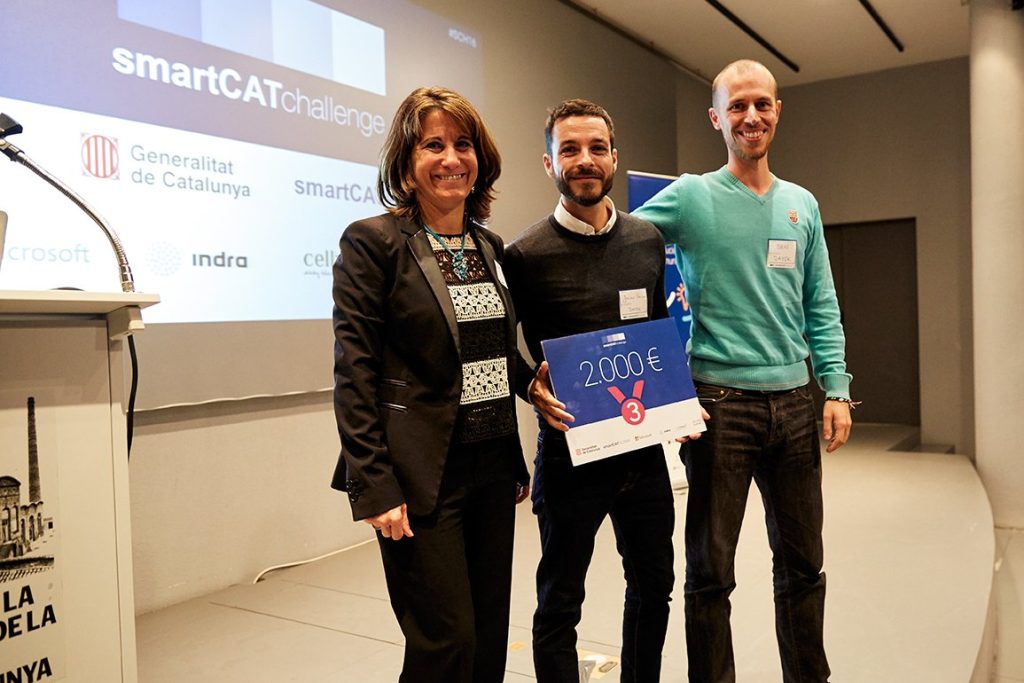
    We’ve been awarded with the 3rd prize from the smartCATchallenge on Thursday 26th of September.

    Read post

  • Flexible work at the heart of any HR policy? Yes, says Inc. Magazine [reading]

    Inc. Magazine explains why Flexible options are critical in any HR policy in order to attract and retain talent, especially millennial profiles. Interesting take on a trend that is going mainstream.   Lastly, no Millennials (or any other generation surveyed) cited the “office during traditional hours as their location of choice for optimum productivity.”  …

    Read post

  • Some good tips for coworking spaces to boost their community [reading]

    Coworking spaces: community is everything. Here are 21 ideas to make it work   21 event ideas for coworking spaces https://thereceptionist.com/21-event-ideas-for-coworking-spaces/   [reading] is a serie of posts offering a selection of interesting articles we share with our readers.

    Read post

  • 3 ways to implement remote working in your company

    3 ways to implement remote working in your company

    So you’re willing to go remote? Congrats! It has been proven one of the best way to foster trust and engagement within employees. But from the technical deployment (some will needs increased security) to the diversity of remote policies you can deploy, the journey is not an easy one. Here is a quick summary of…

    Read post

  • Remote working as a strategy to retain talent [reading]

    Can Remote working be the key to drive employee retention ? Skilled professionals choose contract work for a lot of reasons. Topping that list is flexibility. In-Demand Employee Retention Strategies for an On-Demand Workforce http://www.business2community.com/strategy/demand-employee-retention-strategies-demand-workforce-01607643     [reading] is a serie of posts offering a selection of interesting articles we share with our readers.

    Read post

  • Remote working is on the rise in the US [reading]

    Forbes explains in this article why the future is remote and how several studies prove flexibility will be a key component for any People Management strategy.   According to the Bureau of Labor Statistics, 24% of workers in 2015 did some or all of their work at home, which is up from 19% in 2003.…

    Read post