
Home > Blog > Daysk closes a 200.000€ funding round, led by Finaves & Pearson Capital

Post

Daysk closes a 200.000€ funding round, led by Finaves & Pearson Capital

Daysk, a marketplace specialized in workspace rental, has closed a €200,000 Seed funding round, led by Finaves, the investment fund of the IESE business school and Pearson Capital, as well as other private investors.

This operation is the first capital increase of the company, which aims to consolidate its leadership position in the Spanish market of services promoting the mobility of companies.

Since its launch at the beginning of 2017, Daysk has captured more than 200 spaces in its network and has already closed deals with several leading players in the sector, both coworking spaces of which Aticco, Cloud, or the network of Utopicus spaces of Colonial, as well as Business Centers and hotels.

According to Julien Palier, CEO and co-founder of Daysk:
“Daysk is at the forefront of two market shifts, between new ways of working that rethink the way companies operate and the PropTech revolution impacting the office sector. Our partners have experience in both the B2B business environment and the office real estate sector, so they bring a lot of value in the development of these services. This knowledge is key to the growth we will achieve in the coming months.”

For Paula Sancho, Director of Finaves:
“From Finaves we are very excited about our recent participation in Daysk. We think it is a project with a lot of vision, as it combines the best use of space in cities with greater flexibility in the workplace. Both of these trends are currently on the rise, and they are what IESE is committed to. In addition, the experience and knowledge of the two founders, Julien and Ben, in the technological field and in the growth of companies. As well as a group of co-investors formed by IESE alumni executives and Professor Mathieu Carenzo, who, with great enthusiasm, have supported the project from its first steps.

About Daysk

Daysk is a complete mobility solution for professionals, companies and freelancers.
With its Web platform and App, it offers quick access to desks and meeting rooms, where they can find a diversity of spaces to work, such as: coworkings, business centers, hotels, among others.

In this way, it helps companies to improve their agility and flexible work policies, with access and space management tools (both internal and external, throughout its network). Daysk also offers a complete consulting service focused on the mobility strategy of companies.

The future of work and the Proptech revolution

It is predicted that by 2020, 50% of professionals will have a flexible job with weekly mobility. In the US, 30% of employees are already freelancers. In Europe, 16% of employees work outside the company at least once a week.
Flexible work allows to solve many mobility challenges, from improving work life (less time on transport, more time with family or for oneself) to congestion in cities.
For companies, it is an opportunity to improve the agility of their operations and optimize productivity costs.  In addition to impacting the well-being of their teams, implementing this new way of working in a simple way.

On the other hand, the office market is facing a revolution with the creation of flexible spaces, both in small offices and in corporate facilities. This is reflected in the exponential growth of coworking spaces.
Two trends that indicate a radical evolution of the market and open a gap for innovative solutions such as daysk.com/.

Read more from our blog

  • The surprising variety of the Coworking ecosystem

    The surprising variety of the Coworking ecosystem

    Coworking is richer than it looks. There is a infinite variety of spaces, communities and initiatives. Here is a non exhaustive list. It might help new comers better understand the subtle differences between each and so better chose their future cowork.

    Read post

  • Remote is not only about no-office, relationships matter too [reading]

    Good read: Offices matter, but not as much as happy, productive employees.   One misconception about remote work is that it hinders collaboration. In my experience, the inverse is more likely: offices hinder independent work. The Difference Between “Remote” and “Remote-First”… by @unsalted https://readthink.com/the-difference-between-remote-and-remote-first-7dd38458855f#.bs2brhlv8 [reading] is a serie of posts offering a selection of interesting articles…

    Read post

  • The start-ups that make digital nomadism possible [reading]

    TechCrunch is talking about nomadism and all the start-ups that make it possible. Nice. Traveling the globe used to be relegated to gap years and retirement fantasies, but thanks to tech innovation and some forward-thinking startups, you can now see the world while you take the professional realm by storm. How the startup world is…

    Read post

  • First award for Daysk !

    First award for Daysk !

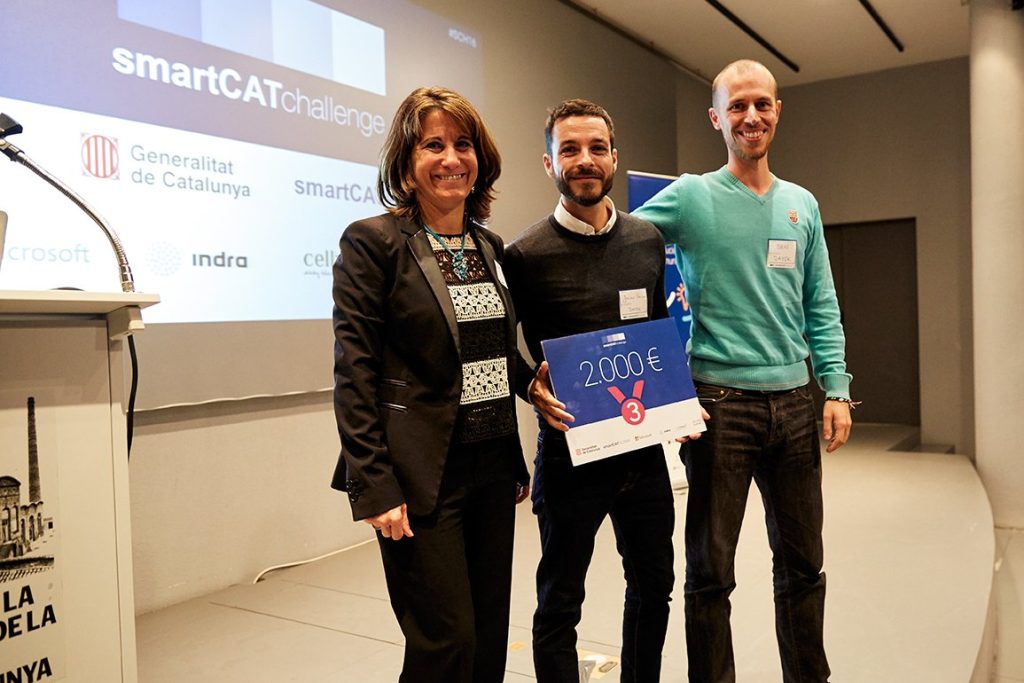
    We’ve been awarded with the 3rd prize from the smartCATchallenge on Thursday 26th of September.

    Read post

  • Flexible work at the heart of any HR policy? Yes, says Inc. Magazine [reading]

    Inc. Magazine explains why Flexible options are critical in any HR policy in order to attract and retain talent, especially millennial profiles. Interesting take on a trend that is going mainstream.   Lastly, no Millennials (or any other generation surveyed) cited the “office during traditional hours as their location of choice for optimum productivity.”  …

    Read post

  • Some good tips for coworking spaces to boost their community [reading]

    Coworking spaces: community is everything. Here are 21 ideas to make it work   21 event ideas for coworking spaces https://thereceptionist.com/21-event-ideas-for-coworking-spaces/   [reading] is a serie of posts offering a selection of interesting articles we share with our readers.

    Read post

  • 3 ways to implement remote working in your company

    3 ways to implement remote working in your company

    So you’re willing to go remote? Congrats! It has been proven one of the best way to foster trust and engagement within employees. But from the technical deployment (some will needs increased security) to the diversity of remote policies you can deploy, the journey is not an easy one. Here is a quick summary of…

    Read post

  • Remote working as a strategy to retain talent [reading]

    Can Remote working be the key to drive employee retention ? Skilled professionals choose contract work for a lot of reasons. Topping that list is flexibility. In-Demand Employee Retention Strategies for an On-Demand Workforce http://www.business2community.com/strategy/demand-employee-retention-strategies-demand-workforce-01607643     [reading] is a serie of posts offering a selection of interesting articles we share with our readers.

    Read post

  • Remote working is on the rise in the US [reading]

    Forbes explains in this article why the future is remote and how several studies prove flexibility will be a key component for any People Management strategy.   According to the Bureau of Labor Statistics, 24% of workers in 2015 did some or all of their work at home, which is up from 19% in 2003.…

    Read post