
Home > Blog > Want to add remote working to your company’s culture? Start sowing now

Post

Want to add remote working to your company’s culture? Start sowing now

The future of work for many industries will be remote first not remote sometimes. If your company is not doing it now, learn how to start preparing your culture for the big change.

Prepare your culture to embrace the remote wave

Even if some notorious cases did a U-turn, a lot of small and big organisations are moving to a more remote workplace. If your culture does not include remote yet, here are a few ideas on how to prepare for a future shift.

Put culture changes in the hands of your employees

First, each change in culture needs its supporters. Employees that will spread the word, show the way and inspire others. Internal evangelists, who will be trusted to try new ways and give feedback on the future of the culture.

Can you suddenly switch to remote offices for everyone? Probably not. Doing it for a handful of people, on the other hand, can pave the way.

Run small experiments

Once you have some squads it is time to start experimenting with them. The goal of each experiment is to trial a potential culture change and measure its impact and feasibility for the whole company. Here are some ideas.

  • Allow people to come in the morning between a larger time range. If you are still asking everyone to be at 9 am sharp in the office you should start here. Being more accommodating with the schedule can be a tremendous help for people with kids or those with long commutes. Crowding in the subway for an hour every morning does put people on edge. You want productive smart people, not balls of nerves.
  • Take everyone on a coworkation. An expensive option for an entire company, coworkations can be very effective for teams. Keep the normal work schedule and flows but do it from somewhere else than the office. This is great as a team-bonding activity too.
  • One-day-a-week out of the office. Squads would be able to work from home, or a place closer to home. Hopefully, you already have the IT infrastructure (VPNs, Cloud tools) to allow your teams to work far from your company’s servers. Remote for a group of selected employees should be enough to highlight potential problems. The important point here is the regularity. Where coworkations are punctual events, the real point of going remote is to do it most of the time.

Those ideas can be used alone, or in any mix, to introduce this new concept of work flexibility. The key takeaway from this is: suggest and open the way, do not impose and direct. Make it a fun experiment where everyone can voice an opinion.

Iterate on the results

When the organisation is satisfied with the learning from those experiments you can then take a decision on the following steps. Is it a good fit for your culture and work style? What was the most successful experiment and how can we roll it out to the rest of the company? Did we identify all the tools to make this work on a permanent basis?

Iterate the selected experiments into your company’s culture. First roll-out one change to the entire company, then experiment with a new change or take an existing one further. Gather feedback. Roll-out. Repeat. You get the idea.

Work flexibility is not something to patch on an existing culture. It rather needs to be melted into. Running experiments on the inside, sowing the idea and showing the way are the first steps towards a deeper change.. Is your company experimenting with work flexibility? Is remote already part of your culture?

Read more from our blog

  • The surprising variety of the Coworking ecosystem

    The surprising variety of the Coworking ecosystem

    Coworking is richer than it looks. There is a infinite variety of spaces, communities and initiatives. Here is a non exhaustive list. It might help new comers better understand the subtle differences between each and so better chose their future cowork.

    Read post

  • Remote is not only about no-office, relationships matter too [reading]

    Good read: Offices matter, but not as much as happy, productive employees.   One misconception about remote work is that it hinders collaboration. In my experience, the inverse is more likely: offices hinder independent work. The Difference Between “Remote” and “Remote-First”… by @unsalted https://readthink.com/the-difference-between-remote-and-remote-first-7dd38458855f#.bs2brhlv8 [reading] is a serie of posts offering a selection of interesting articles…

    Read post

  • The start-ups that make digital nomadism possible [reading]

    TechCrunch is talking about nomadism and all the start-ups that make it possible. Nice. Traveling the globe used to be relegated to gap years and retirement fantasies, but thanks to tech innovation and some forward-thinking startups, you can now see the world while you take the professional realm by storm. How the startup world is…

    Read post

  • First award for Daysk !

    First award for Daysk !

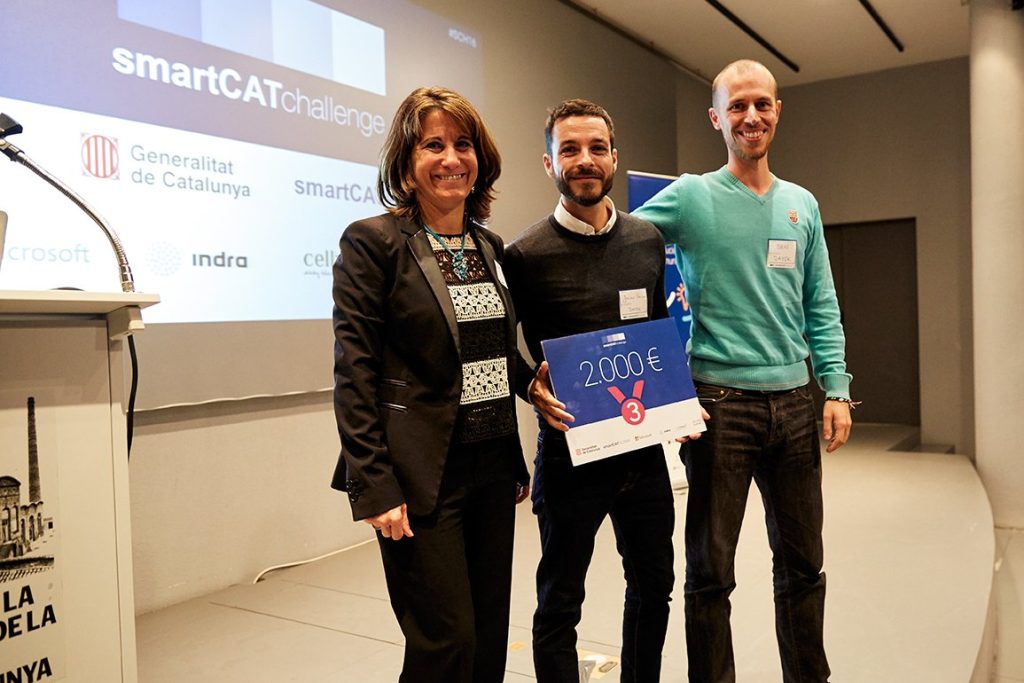
    We’ve been awarded with the 3rd prize from the smartCATchallenge on Thursday 26th of September.

    Read post

  • Flexible work at the heart of any HR policy? Yes, says Inc. Magazine [reading]

    Inc. Magazine explains why Flexible options are critical in any HR policy in order to attract and retain talent, especially millennial profiles. Interesting take on a trend that is going mainstream.   Lastly, no Millennials (or any other generation surveyed) cited the “office during traditional hours as their location of choice for optimum productivity.”  …

    Read post

  • Some good tips for coworking spaces to boost their community [reading]

    Coworking spaces: community is everything. Here are 21 ideas to make it work   21 event ideas for coworking spaces https://thereceptionist.com/21-event-ideas-for-coworking-spaces/   [reading] is a serie of posts offering a selection of interesting articles we share with our readers.

    Read post

  • 3 ways to implement remote working in your company

    3 ways to implement remote working in your company

    So you’re willing to go remote? Congrats! It has been proven one of the best way to foster trust and engagement within employees. But from the technical deployment (some will needs increased security) to the diversity of remote policies you can deploy, the journey is not an easy one. Here is a quick summary of…

    Read post

  • Remote working as a strategy to retain talent [reading]

    Can Remote working be the key to drive employee retention ? Skilled professionals choose contract work for a lot of reasons. Topping that list is flexibility. In-Demand Employee Retention Strategies for an On-Demand Workforce http://www.business2community.com/strategy/demand-employee-retention-strategies-demand-workforce-01607643     [reading] is a serie of posts offering a selection of interesting articles we share with our readers.

    Read post

  • Remote working is on the rise in the US [reading]

    Forbes explains in this article why the future is remote and how several studies prove flexibility will be a key component for any People Management strategy.   According to the Bureau of Labor Statistics, 24% of workers in 2015 did some or all of their work at home, which is up from 19% in 2003.…

    Read post